
Darkness Visible
The Long Shadow of Dictatorship
may 6—november 22, 2026
Opening MAY 5, 6.30pm
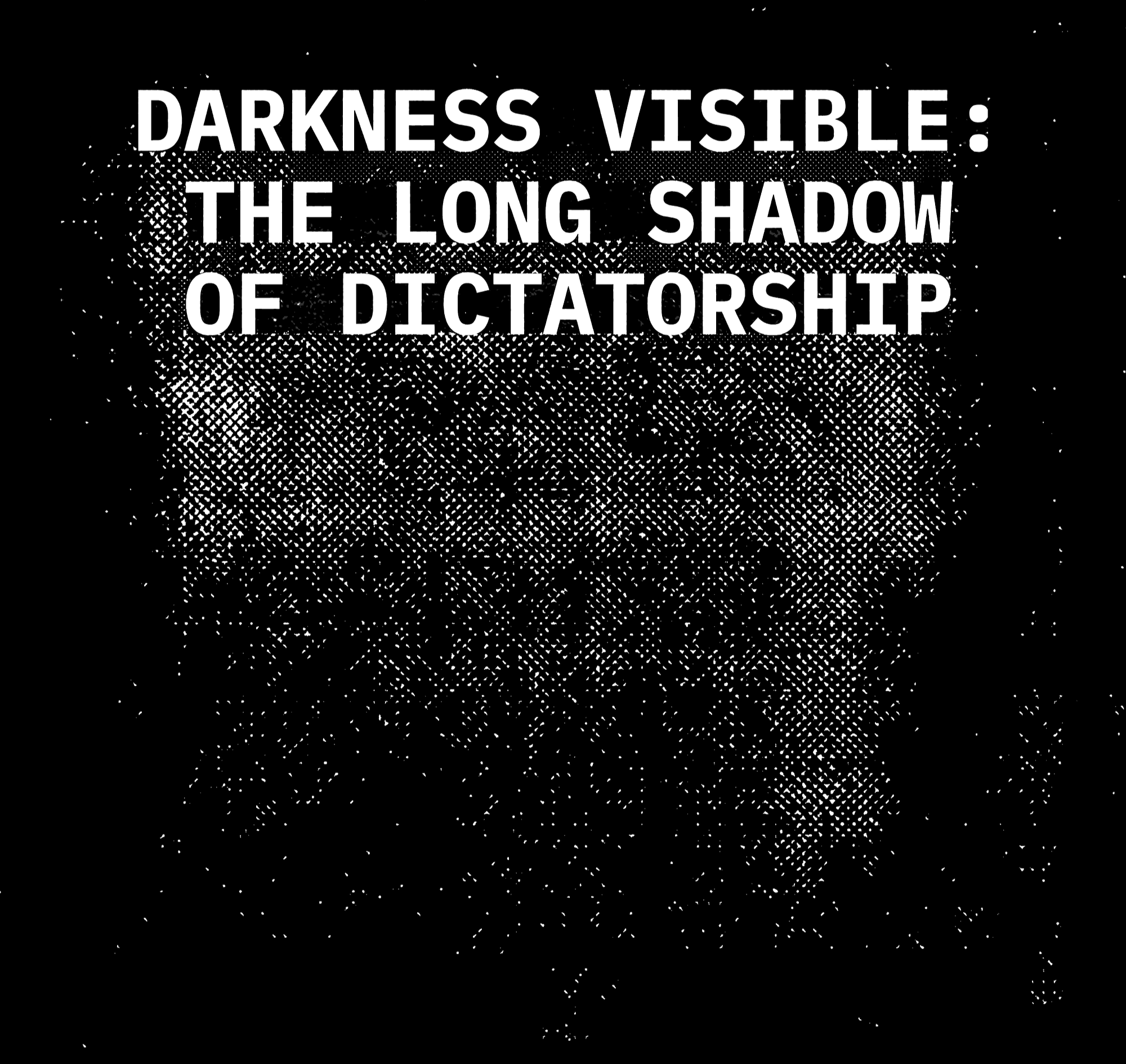
Darkness Visible: The Long Shadow of Dictatorship is an exhibition developed by the Museo de Arte Moderno de Buenos Aires at and with Spazio Punch on the occasion of the 50th Anniversary of the coup d’état that ushered in Argentina’s last military dictatorship, a regime that implemented a systematic policy of censorship, torture, murder and forced disappearance.
With nineteen artists and collectives from a wide range of generations and works spanning the 1970s to the present, the exhibition claims the museum space as a civic platform, affirms the role of artists in society and positions art as a vehicle for the understanding of history, the protection of memory and of human rights, the engagement of activism against State terror and as a means to raise civic awareness in the face of violence. The exhibition includes works by major contemporary artists who responded to this historic moment with alarm, condemnation or criticism; artists who embodied the transition from dictatorship to democracy and who continue to denounce the violence prevailing in contemporary societies and the increasingly physical and psychological violence against women – most notably in the form of femicide.
The words ‘Darkness Visible’ are taken from the description of Hell in John Milton’s Paradise Lost (1667). The oxymoron serves as an apt metaphor for the role of the visual arts in bringing to light what has been hidden or censored and yet remains unbearable: the continued presence of the disappeared as a symbol of Argentina’s last dictatorship.
An exhibition developed by Museo de Arte Moderno de Buenos Aires at the initiative of Spazio Punch, Venice
ARTISTS
Nicanor Aráoz (Buenos Aires, Argentina, 1981)
Eduardo Basualdo (Buenos Aires, Argentina, 1977)
Marcelo Brodsky (Buenos Aires, Argentina, 1954)
Luis Camnitzer (Lübeck, Germany, 1937 )
Flavia Da Rin (Buenos Aires, Argentina, 1978)
Sergio De Loof (Buenos Aires, Argentina, 1962-2020)
León Ferrari (Buenos Aires, Argentina, 1920-2013)
Ana Gallardo (Rosario, Argentina, 1958)
Eduardo Gil (Buenos Aires, Argentina, 1948)
Guillermo Kuitca (Buenos Aires, Argentina, 1961)
Liliana Maresca (Buenos Aires, Argentina, 1951-1994) & Marcos López (Santa Fe, Argentina, 1958)
Gianni Mestichelli (Ascoli Piceno, Italy, 1945)
Marta Minujín (Buenos Aires, Argentina, 1943)
Luis Pazos (La Plata, Argentina, 1940-2023)
Néstor Perlongher (Avellaneda, Argentina, 1949–1992)
Aldo Sessa (Buenos Aires, Argentina, 1939)
Archivo de la Memoria Trans (Argentina, founded 2014)
La Organización Negra (Argentina, 1984-1993)
CURATED BY
Victoria Noorthoorn, Director of the Museo de Arte Moderno de Buenos Aires
Patricio Orellana, Head of the Curatorial Department of the Museo de Arte Moderno de Buenos Aires
Augusto Maurandi, Creative Director of Spazio Punch
OPENING
May 5, 2026 — 6.30PM
EXHIBITION
May 6 — November 22, 2026
Wednesday to Monday, 10am–1pm and 3pm–7pm
IT Darkness Visible: The Long Shadow of Dictatorship è una mostra ideata dal Museo de Arte Moderno de Buenos Aires presso e in collaborazione con lo Spazio Punch in occasione del 50° anniversario del colpo di Stato che ha dato inizio all’ultima dittatura militare argentina, un regime che ha attuato una politica sistematica di censura, tortura, omicidio e sparizioni forzate.
Con diciannove artisti e collettivi appartenenti a diverse generazioni e opere che spaziano dagli anni Settanta ai giorni nostri, la mostra rivendica lo spazio museale come piattaforma civica, afferma il ruolo degli artisti nella società e pone l’arte come strumento per la comprensione della storia, la tutela della memoria e dei diritti umani, l’impegno nell’attivismo contro il terrore di Stato e come mezzo per sensibilizzare la cittadinanza di fronte alla violenza. La mostra include opere di importanti artisti contemporanei che hanno reagito a questo momento storico con allarme, condanna o critica; artisti che hanno incarnato la transizione dalla dittatura alla democrazia e che continuano a denunciare la violenza prevalente nelle società contemporanee e la violenza sempre più fisica e psicologica contro le donne – in particolare sotto forma di femminicidio.
Le parole Darkness Visible sono tratte dalla descrizione dell’Inferno nel Paradiso perduto (1667) di John Milton. L’ossimoro funge da metafora appropriata per il ruolo delle arti visive nel portare alla luce ciò che è stato nascosto o censurato e che tuttavia rimane insopportabile: la presenza costante delle persone scomparse come simbolo dell'ultima dittatura argentina.
Una mostra del Museo de Arte Moderno de Buenos Aires su iniziativa di Spazio Punch, Venezia
ARTISTI
Nicanor Aráoz (Buenos Aires, Argentina, 1981)
Eduardo Basualdo (Buenos Aires, Argentina, 1977)
Marcelo Brodsky (Buenos Aires, Argentina, 1954)
Luis Camnitzer (Lübeck, Germania, 1937 )
Flavia Da Rin (Buenos Aires, Argentina, 1978)
Sergio De Loof (Buenos Aires, Argentina, 1962-2020)
León Ferrari (Buenos Aires, Argentina, 1920-2013)
Ana Gallardo (Rosario, Argentina, 1958)
Eduardo Gil (Buenos Aires, Argentina, 1948)
Guillermo Kuitca (Buenos Aires, Argentina, 1961)
Liliana Maresca (Buenos Aires, Argentina, 1951-1994) & Marcos López (Santa Fe, Argentina, 1958)
Gianni Mestichelli (Ascoli Piceno, Italia, 1945)
Marta Minujín (Buenos Aires, Argentina, 1943)
Luis Pazos (La Plata, Argentina, 1940-2023)
Néstor Perlongher (Avellaneda, Argentina, 1949–1992)
Aldo Sessa (Buenos Aires, Argentina, 1939)
Archivo de la Memoria Trans (Argentina, fondato nel 2014)
La Organización Negra (Argentina, 1984-1993)
A CURA DI
Victoria Noorthoorn, Direttrice del Museo de Arte Moderno de Buenos Aires
Patricio Orellana, Responsabile del Dipartimento Curatoriale del Museo de Arte Moderno de Buenos Aires
Augusto Maurandi, Direttore Creativo di Spazio Punch
OPENING
5 maggio, 2026 — 18.30
MOSTRA
6 Maggio — 22 Novembre 2026
da Mercoledì a Lunedì, 10–13 e 15–19